
Developer Updates: Nemo-Pi
The Nemo-Pi underwater weather station: its origins, technical progress and every developer update from May 2017 to January 2021.
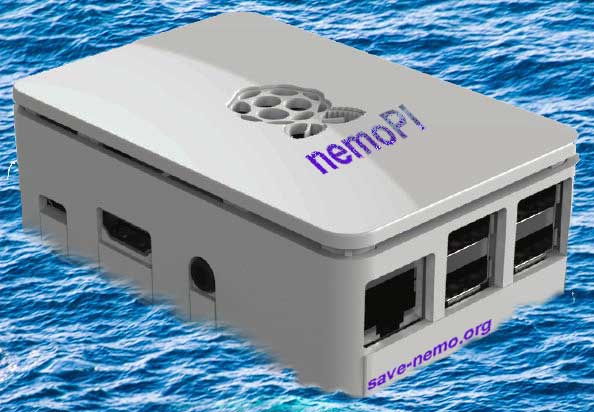
Developer blog
The Nemo-Pi is an underwater weather station.
As its name suggests, the Nemo-Pi is based on the well-known single-board computer from the Raspberry Foundation.
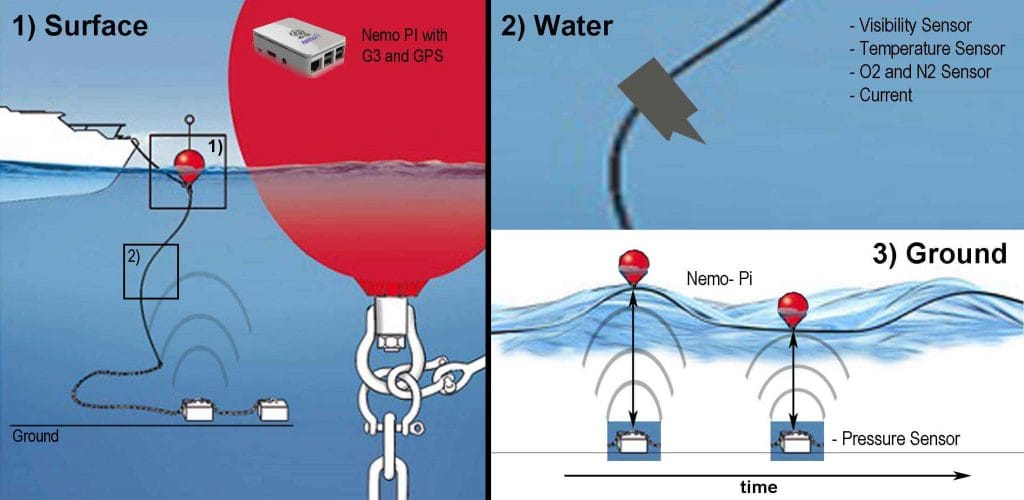
Like its counterpart on land, the Nemo-Pi measures relevant physical conditions on site, such as temperature, currents, wave height, visibility and CO2, and sends the data to our web server, which makes the readings freely available to the public. Here we publish information about our ongoing development work.
Development and history
Three billion people depend directly or indirectly on our oceans.
These so-called rainforests of the seas are in serious danger: pollution, global warming and direct damage to coral reefs from growing tourism will, in the near future, destroy many of the most beautiful and biologically active regions, such as the Great Barrier Reef and the Coral Triangle. Yet the solution is quite simple:
The Nemo-Pi
…is the only solar-powered, lowest-cost data buoy that collects live data at specific locations and analyses it in the cloud.
Our work is nonprofit. People affected, as well as authorities, universities, companies and other organisations, can therefore access current readings.
Basic operating diagram
Cloud analysis
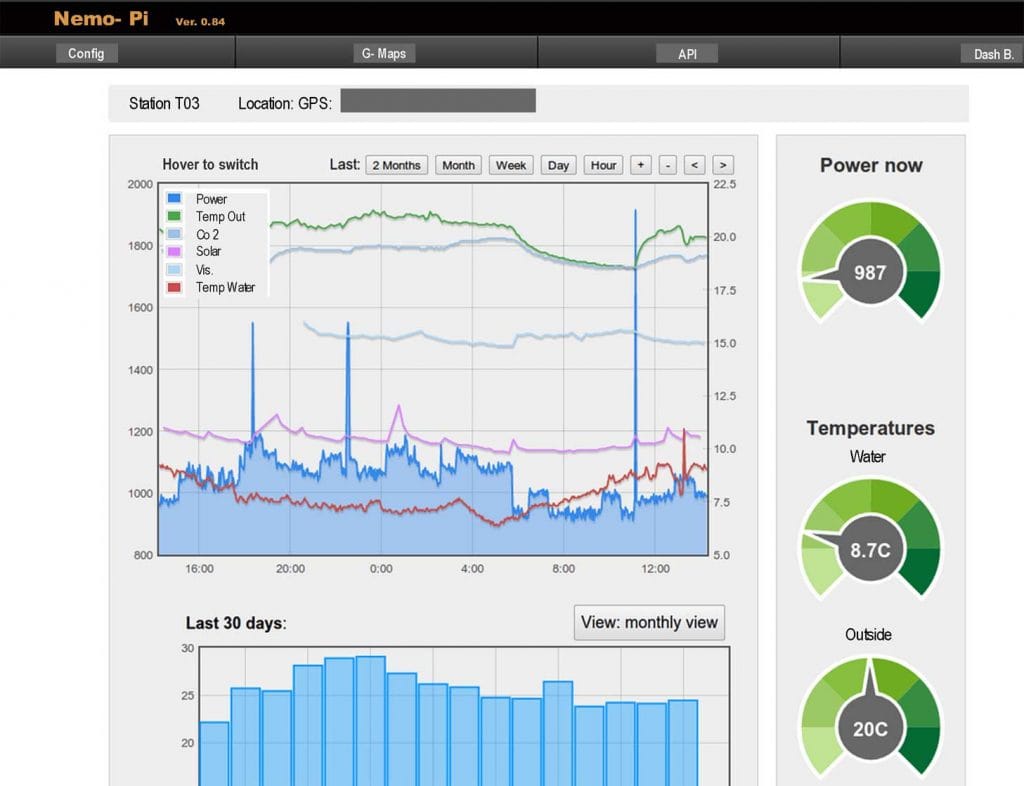
Why?
Every diver and snorkeller knows the feeling: a day trip to a reef quickly becomes a huge disappointment when local conditions are not right. Waves may be too high, visibility poor or currents too strong. A valuable day of your holiday is lost.
With Nemo-Pi installed on our moorings, the hotel, dive school, captain or harbour office knows the conditions at the site before departure. A reef may not even be visited in those circumstances, potentially preventing anchor damage.
Collecting underwater data is already one of the most important issues in marine conservation. There is good reason why reefs are called the “rainforests of the oceans”: they face enormous threats and need protection.
The bleaching of Australia's Great Barrier Reef is a chilling example. Growing tourism also has serious consequences for flora and fauna — not just in Southeast Asia, but worldwide.
The Nemo-Pi is more than a weather station. Its design is modular. Depending on the location, it can measure different environmental factors, such as NOx, pH or temperature, and send them to conservation organisations, authorities and associations, which can act on those readings to protect the oceans.

History — and why Raspberry?
The Nemo-Pi project was inspired by the deep-sea probes of NOAA, the National Oceanic and Atmospheric Administration.
Unlike NOAA's probes, the Nemo-Pi collects its data close to shore, at water depths of up to 60 m. This makes it considerably more cost-effective and feasible to deploy in large numbers.
The Raspberry Pi and its IoT derivatives offer the best basis for our work thanks to their large user community, open interfaces and inexpensive sensors.
Goals
We want the Nemo-Pi to go into series production. It can measure seawater quality at very little expense not only in Asia, but also along Germany's North Sea and Baltic coasts.
We urgently need your help with this. If the subject interests you and you know your way around the Pi — Pio, Python, C+, Linux or electrical engineering — simply write to nemopi@save-nemo.org.
Update: January 2021
Here is the ongoing technical update on the Nemo-Pi, maintained continuously by our volunteer developers. Subscribe: Nemo-Pi Cloud
Overall: 92% · Sensors: 89% · Programming: 75%
Technology
Key: 1) Idea/project planning; 2) Alpha test; 3) Modifications/core code; 4) Evaluation/beta test; 5) Long-term test; 6) Stable.
| Type | Stage | 1 | 2 | 3 | 4 | 5 | 6 |
|---|---|---|---|---|---|---|---|
| General | |||||||
| Concept & logic | X | ||||||
| Marketing / outreach | X | ||||||
| Housing / construction | X | ||||||
| Durability | X | ||||||
| Cloud | X | ||||||
| Sensors | X | ||||||
| Pressure | X | ||||||
| Temperature | X | ||||||
| GPS | X | ||||||
| Current | X | ||||||
| Light refraction | X | ||||||
| CO2 | X | ||||||
| pH | X | ||||||
| ORP | X | ||||||
| Wave height | X | ||||||
| Barometer | X | ||||||
| Conductivity | X | ||||||
| Light intensity | X | ||||||
| Experimental | X | ||||||
| Nitrogen | X | ||||||
| Programming | |||||||
| Source code | X | ||||||
| Debugging | X | ||||||
| Energy efficiency | X | ||||||
| Transmission | X | ||||||
| Data storage | X |
News
3 January 2021
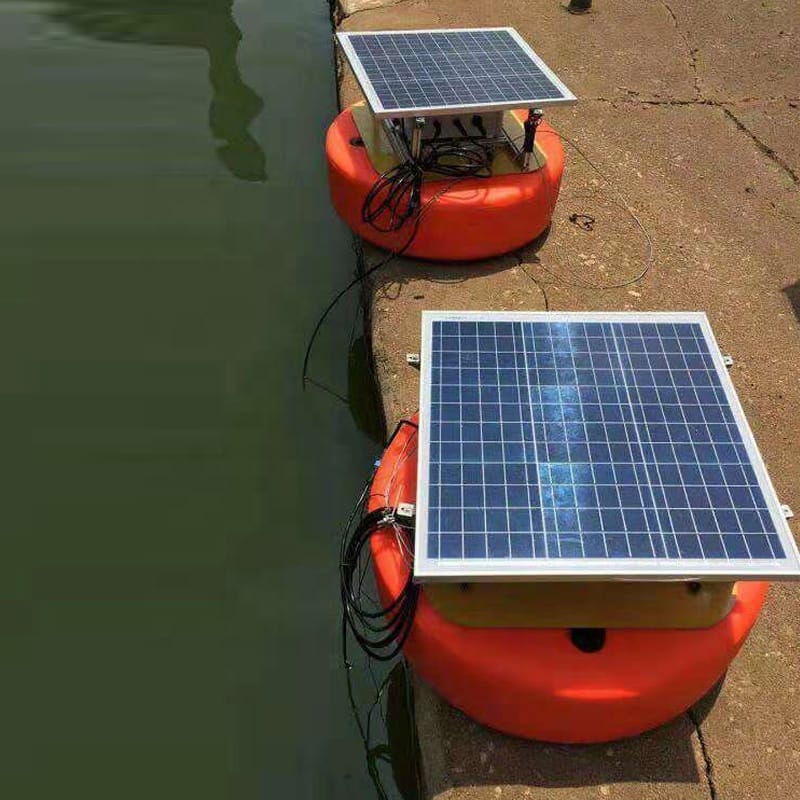
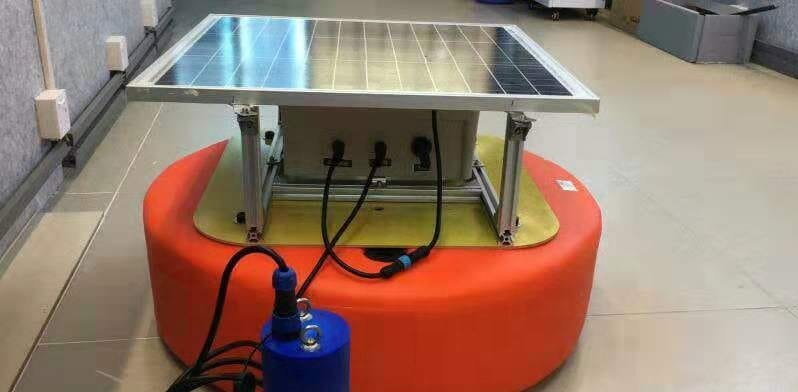
The coronavirus situation in Europe is getting worse. Here in Herford, North Rhine-Westphalia, Germany, we have curfews. The good news: the buoy body is almost perfect and supplies enough solar energy to run the Nemo-Pi continuously, even in northern countries.
The cloud software has also received an update. The data connections are working! Our current bottleneck is a shortage of JavaScript / React developers for the frontend. If you know someone who can and would like to support our programming team, please send an email.
6 November 2020
We have redesigned our hardware! Here is the new Nemo-Pi buoy design. It is slightly larger, has a more powerful solar panel and is considerably less susceptible to interference. Unfortunately, we lack long-term tests because of COVID.
6 June 2020
Coronavirus has hit our nonprofit association hard, but our programmers are using lockdown to make intensive progress. Olaf and his team in New Zealand are working hard on the frontend, but we need more support from programmers.
20 January 2020
Work continues… We ran into some problems with the battery when shipping the Smart Mooring to New Zealand. For safety reasons, it first has to be purchased locally. Josh's task now is to identify and format the sensor telemetry correctly on the Pi itself and send it to the API.
28 December 2019
https://nemo-pi.com is live!
The cloud is nearly here, but first we are putting together a mailing list of our biggest fans — you! That way, you will be the first to hear about it. A Smart Mooring will arrive in New Zealand in the new year, where our programmer Josh will connect it to the API that Olaf has almost finished building and test it. It is important that the Nemo-Pi formats the individual sensors' data correctly and then sends it securely to the API.
May 2019
The final phase of developing our own cloud is beginning!
Lead programmer Olaf Wrieden is coordinating the APIs, databases and web app. We are delighted to welcome Josh Banning-Taylor from New Zealand to the technical team. Josh is taking on API programming — the data interface between the local Nemo-Pi and the cloud.
May 2019
We thank Mailgun for providing its email system and APIs free of charge. This makes our programming much easier.
April 2019
Google.org donates high-performance servers and an AI backend to Save Nemo e.V.
Good news for Save Nemo. We have been working on our own Nemo cloud software for a long time, until now on our own servers. “The technology is crucial,” says Olaf Wrieden.
The nonprofit arm of Google has now provided us with a high-performance cloud server. THANK YOU, Google!
We will use the Kubernetes container system to make the Nemo-Pi more scalable.
Work also continues behind the scenes. The intelligent Nemo-Pi Cloud is in development. We will introduce it soon.
25 January 2019
We are delighted to welcome Olaf Wrieden from Auckland University of Technology (AUT) as our lead developer.
Mr Wrieden has supported Save Nemo e.V. for a long time and is now taking overall responsibility for software development.
Here is a selection of press coverage from 2018:
- The Raspberry Foundation: read here
- Electro{Maker}: read here
- Deeper Blue: read here
- Elektronikpraxis: read here
We expect our new, final NOx and CO2 sensors in March. After that, we will announce the first final release of the Nemo-Pi.
2 August 2018
Development continues behind the scenes. Unfortunately, the NOx and CO2 sensor did not survive the long-term saltwater test, and we are now looking for alternatives.
We were very surprised that we had been able to measure light refraction underwater for more than six months — in other words, suspended matter in the sea, which is extremely important for divers. We are delighted that the specialist press is taking notice of the Nemo-Pi.
The MagPi magazine featured us in issue 72, on page 34. Download: MagPi issue 72.
You can also read what Electro{Maker} wrote here.
7 June 2018
The Nemo-Pi wins the Google.org Impact Challenge as the best local project in North Rhine-Westphalia. Thank you to everyone who supported us!
8 April 2018
Even now, in spring in chilly Germany, our 10 W solar panel generates enough electricity to run the Nemo-Pi for about 90 minutes a day without draining the LiPo batteries. That is enough to send readings to our server around 15 times a day. We think that is a good result. Our test systems in Thailand, still based on the Raspberry Pi 1 and Arduino, have also been running reliably for more than a year.
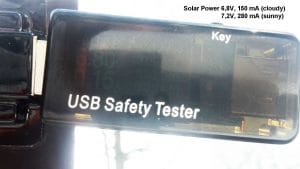
Here are a few pictures to show what the Nemo-Pi will look like in future. We are currently testing with the Raspberry Pi Zero. We cut open a prototype and laid out the components individually.

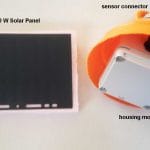

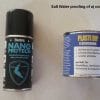
What comes next? The durability of the components, particularly the solar panel, is still giving us headaches. After all, it will have to withstand constant contact with seawater and high UV exposure. We are currently testing this plastic sealant and this anti-corrosion coating for that purpose.
The biggest power consumer is the data transmission module. Even though the Nemo-Pi only needs to establish a brief data connection to send readings to our server, every mA is valuable.
New GSM/GPRS modules are now available that consume well under 2 Ah. We have ordered two and will put them into operation later in April to measure their actual consumption and transmission power.
3 February 2018
A new sensor that measures light refraction underwater, and therefore suspended particles / visibility, will be tried out on our next mission to Thailand in three weeks.
24 January 2018
We are pleased to have made it into the second round of the Google Impact Challenge. If we win, the Nemo-Pi could go online in many regions of Germany, as well as in Asia, as early as the beginning of 2019.
14 December 2017
A lot has happened!
In October, we deployed five modified sensors for CO2, NOx, pH, water pressure and temperature in the depths of the sea at Manado, Sulawesi. The aim is to check their resistance to saltwater after six months. We have also optimised the Pi's power consumption and experimented with other platforms, including Arduino, XBee and others.
August 2017
Choosing the right water-quality sensors is not easy. We now know how to modify inexpensive components to make them resistant to saltwater, but long-term testing is still outstanding. We will deploy some prototypes on our Sulawesi mission.
14 May 2017
Today marks a special milestone in the development of the Nemo-Pi:
For the past 14 days, our prototype has been sending water temperature and GPS data to our web server “without external power”, using a solar panel and a 3G connection.
The data is currently stored at Google in CSV format. Visualisation and a Google Maps map will follow later.
Thank you to Thorsten for the excellent implementation of the power supply. We will now turn our attention to the remaining sensors and making them seawater-resistant.
Originally published in German on 25 May 2019. Read the archived original.