
Half a trillion corals worldwide
Researchers count corals and assess their risk of extinction. Large populations offer some reassurance, but they do not remove the urgent need to tackle climate change.
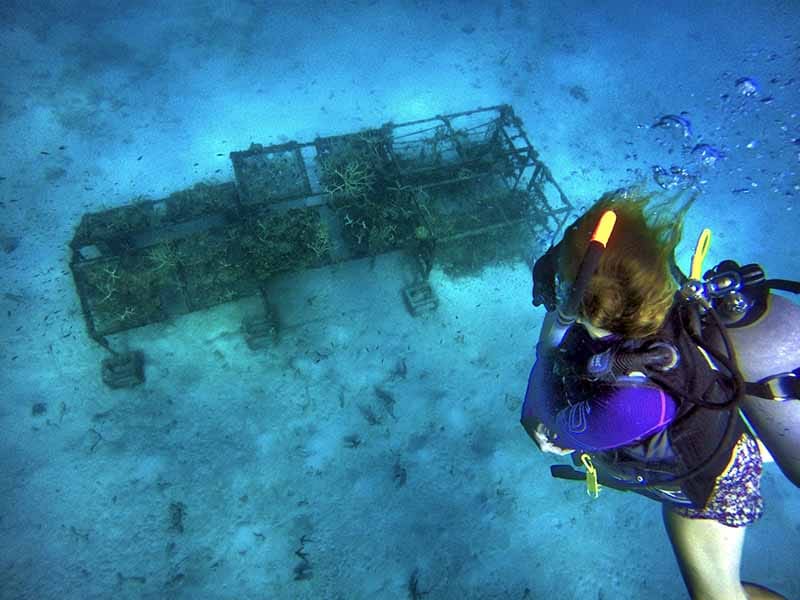
Scientists investigate coral numbers and assess their risk of extinction.
A sobering truth
A previously unanswered question has been resolved: the Pacific alone has half a trillion corals. That was the finding of a study led by Dr Andy Dietzel at the ARC Centre of Excellence for Coral Reef Studies at James Cook University (Coral CoE at JCU). “This is roughly the same number as the trees in the Amazon or the birds in the world,” Dr Dietzel said. The findings are crucial to research and conservation efforts for corals and coral reefs, which are declining worldwide under the effects of climate change.
“We need to know how abundant a species is to assess its risk of extinction,” Dr Dietzel said. According to him, each of the eight most common coral species in the Pacific region has a population larger than the human population of the world—more than 7.8 billion people at the time. The Great Barrier Reef alone was estimated to have ten billion corals. This suggested that, although regional coral losses could be devastating for individual reefs, the global extinction risk for most coral species was lower than previously thought. Instead, extinction could unfold over a much longer period because many coral species have large populations spread across wide geographical ranges.
However, a lower risk of extinction is no reason to ease efforts to tackle climate change. “Coral restoration is not a solution to the consequences of climate change. You would have to grow around 250 million adult corals to increase coral cover on the Great Barrier Reef by just one per cent,” said Professor Terry Hughes, a co-author of the study. Action therefore needed to be taken to reduce the threats to reefs—long before climate change caused global extinctions and irreparable damage.
Originally published in German on 28 February 2021. Read the archived original.