
How Assisted Evolution May Save Coral Reefs
A helping hand for evolution: how assisted evolution could help coral reefs withstand environmental threats.
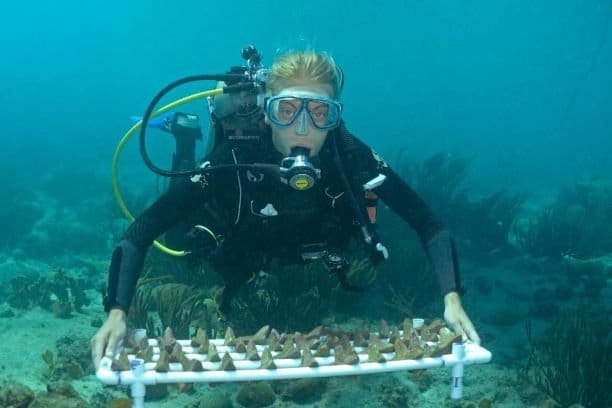
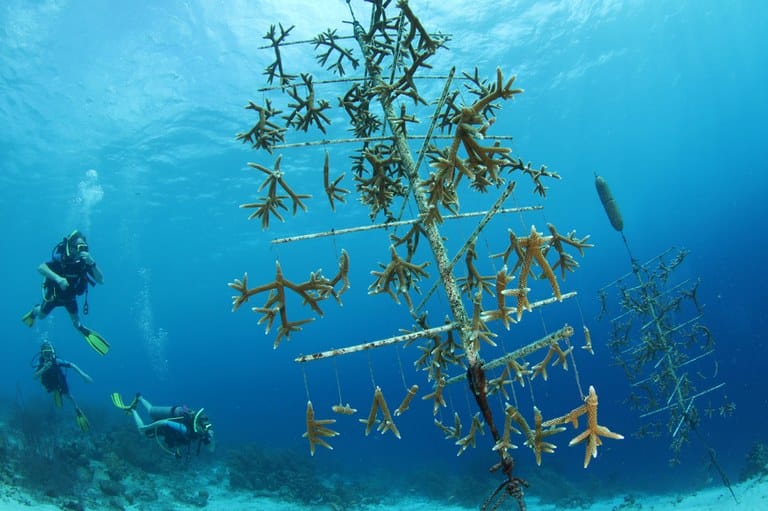
How assisted evolution could save coral reefs.
A possible solution?
Here is what it involves.
Coral reefs are an important part of marine ecosystems and play a crucial role in ocean biodiversity. Unfortunately, human pressures such as climate change, overfishing and pollution put them at risk. In recent years, however, scientists have made some progress towards saving coral reefs. One approach is known as “assisted evolution”.

Assisted evolution is a biotechnology-based approach to saving coral reefs. It aims to use the natural variation within coral populations to make them more resistant to environmental threats such as rising water temperatures and increasing acidity. The approach involves several steps. First, researchers identify coral populations that are more resistant to higher water temperatures. These corals are then selectively bred to pass their resistance-related genes on to their offspring. Finally, the corals are placed on reefs to test their resilience and monitor their growth.
The original account also describes other approaches to assisted evolution, including the use of CRISPR-Cas9 genome-editing technology to modify corals specifically in response to particular environmental threats.
It cites examples suggesting that assisted evolution could be promising. One is the “Coral IVF” project—IVF stands for in vitro fertilisation—at Southern Cross University in Australia. According to the account, corals resistant to higher water temperatures were taken into a laboratory for artificial fertilisation. The resulting larvae were then released onto natural reefs, where their growth and resistance to higher water temperatures were monitored. The account reports that larvae from the resistant corals had higher survival and growth rates than naturally occurring larvae.
Originally published in German on 9 March 2023. Read the archived original.